
Reencontros, Inspiração e a Educação no Limite da Inovação.
Por Valéria Monteiro.
Recentemente reencontrei a querida professora Vilma, que marcou com afeto o meu percurso escolar no Imaculada. Eu não participava do time da ginástica olímpica, aquelas meninas sortudas que passavam ainda mais tempo com ela também no clube Regatas, onde a Vilminha era técnica. Sempre fui um pouco grande pra minha idade, tinha medo de me machucar… Uma frustração, confesso. Porque a Vilminha era uma das professoras mais queridas da escola. Sempre me senti inspirada por ela.
Esse reencontro despertou mais do que saudade: me fez refletir sobre o papel transformador da educação e sobre como ela precisa se reinventar diante das transformações que já batem à porta.
Estamos em um ponto de inflexão.
A presença cada vez mais constante da inteligência artificial nas nossas rotinas exige uma revisão urgente da equação educacional. Não se trata apenas de adicionar tecnologia à sala de aula , trata-se de revisar a missão da educação frente a um mundo onde máquinas fazem cada vez mais, e o que se espera dos humanos é cada vez mais sofisticado.
As habilidades mais demandadas no mundo que se impõe:
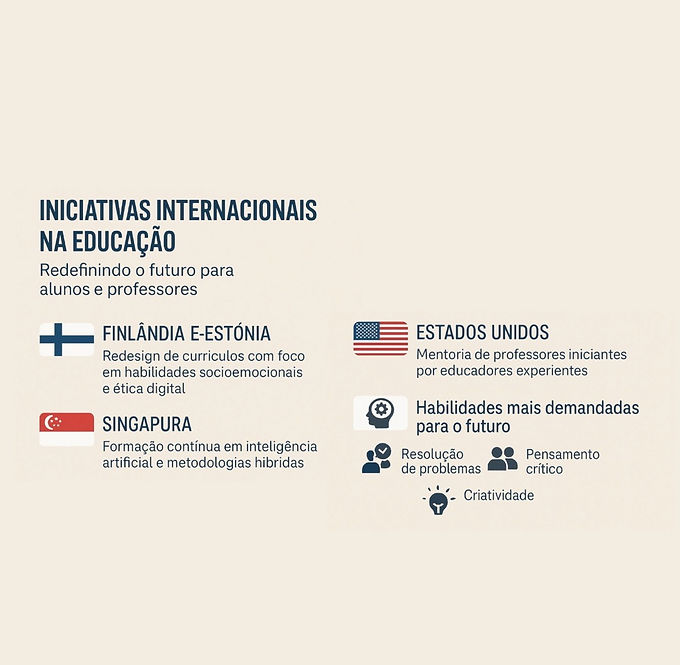
Organismos como o World Economic Forum e o Institute for the Future vêm destacando, de forma consistente, um novo conjunto de habilidades essenciais:
• Pensamento crítico e resolução de problemas complexos
• Criatividade e inovação
• Inteligência emocional e empatia
• Colaboração e comunicação intercultural
• Alfabetização digital e ética tecnológica
• Autonomia e aprendizagem contínua (lifelong learning)
Essas competências não se constroem apenas com conteúdo. Elas exigem uma experiência escolar rica em diversidade cognitiva, estímulo sensorial, desafios reais e, principalmente, vínculos humanos significativos.
Educar também é cuidar do cérebro
Estudos em neuroeducação, como os do Center on the Developing Child da Universidade de Harvard e da UFRGS, demonstram que experiências multisensoriais, o brincar livre, a resolução de problemas abertos e a convivência empática continuam sendo pilares do amadurecimento cerebral, especialmente em contextos permeados por tecnologia.
Ou seja: a presença da IA torna ainda mais urgente uma pedagogia que não atrofie o cérebro humano, mas o estimule de forma ética, integral e emocionalmente conectada.
O mundo já está em movimento
Finlândia, Estônia, Singapura e Canadá são alguns dos países que vêm ajustando suas políticas educacionais com os novos tempos. A Finlândia substituiu disciplinas tradicionais por temas integrados. A Estônia prioriza cultura digital desde os primeiros anos escolares. Singapura investe na formação contínua de professores em IA e neurociência. O Canadá fortaleceu as chamadas “soft skills” no currículo nacional.
E no Brasil, como estamos?
Iniciativas como o programa Escola em Tempo Integral e o Pé-de-Meia, incentivo financeiro para manter alunos no ensino médio, são positivas. Mas ainda faltam integração, continuidade e foco na formação de professores como protagonistas da transformação.
Segundo pesquisa da Fundação Lemann, 60% dos docentes do ensino básico não se sentem preparados para lidar com as novas tecnologias em sala de aula. Esse número aponta para uma lacuna profunda.
⸻
Como formar novas Vilminhas — e apoiá-las?
Professores como a Vilminha são inesquecíveis porque inspiram. Eles fazem mais do que ensinar: acreditam. E é justamente isso que nenhuma IA será capaz de replicar.
Uma política de futuro para a educação brasileira deve:
• Oferecer formação docente em neuroeducação, IA aplicada e ética digital
• Criar redes de mentoria e apoio emocional aos professores
• Estimular práticas pedagógicas que engajem o cérebro de forma integral
• Usar IA como ferramenta de apoio, nunca de substituição
• Valorizar o professor como modelo inspirador e humano essencial
Conclusão: a educação como defesa e como horizonte
Estamos em um momento decisivo. A forma como reconfigurarmos a educação agora dirá quem somos como sociedade e quem seremos no futuro.
A inteligência artificial, sozinha, não moldará o mundo. Mas a educação, sim.
Reencontros como o que tive com a Vilminha nos lembram que, por trás de cada memória transformadora, há um professor que acreditou. E isso, felizmente, nenhuma máquina pode replicar.
______
Inglês:
Reunions, Inspiration, and Education at the Edge of Innovation
By Valeria Monteiro
I recently had the joy of reuniting with dear Professor Vilma, who played such an affectionate and meaningful role in my early school years at Imaculada. I wasn’t part of the Olympic gymnastics team—those lucky girls who got to spend even more time with her at the Regatas Club, where Vilminha also coached. I was always a bit tall for my age and afraid of getting hurt… It was a frustration, I must admit. Because Vilminha was one of the most beloved teachers at school. I’ve always felt inspired by her.
That reunion stirred more than nostalgia—it made me reflect on the transformative role of education and how it must reinvent itself in the face of the changes already knocking at our door.
⸻
We Are at a Tipping Point
The growing presence of artificial intelligence in our daily lives calls for an urgent rethinking of the educational equation. It’s not just about adding technology to the classroom—it’s about reimagining the mission of education in a world where machines are taking on more and more tasks, and what’s expected of humans is becoming increasingly sophisticated.
⸻
The Most In-Demand Skills for the Emerging Future
Organizations such as the World Economic Forum and the Institute for the Future have consistently highlighted a new set of essential skills:
• Critical thinking and complex problem-solving
• Creativity and innovation
• Emotional intelligence and empathy
• Collaboration and cross-cultural communication
• Digital literacy and tech ethics
• Autonomy and lifelong learning
These competencies are not built through content alone. They require a rich school experience—one that fosters cognitive diversity, sensory stimulation, real-world challenges, and, most of all, meaningful human connection.
⸻
To Educate Is Also to Care for the Brain
Research in the field of neuroeducation, including studies by Harvard’s Center on the Developing Child and the Brazilian university UFRGS, shows that multisensory experiences, free play, open-ended problem solving, and empathetic interaction are foundational to healthy brain development—especially in tech-saturated environments.
In other words, the presence of AI makes it even more urgent to adopt a pedagogy that stimulates the human brain in ethical, holistic, and emotionally connected ways, rather than allowing it to atrophy.
⸻
The World Is Already on the Move
Countries like Finland, Estonia, Singapore, and Canada are adjusting their educational policies to meet the demands of this new era. Finland has replaced traditional school subjects with integrated themes. Estonia emphasizes digital literacy from early childhood. Singapore continuously trains teachers in AI and neuroscience. Canada has embedded soft skills into its national curriculum.
⸻
And What About Brazil?
Programs like Escola em Tempo Integral (Full-Time School) and Pé-de-Meia (a financial incentive to keep students in high school) are positive steps. But there is still a lack of integration, continuity, and a clear focus on teacher training as a central lever of transformation.
According to a survey by the Lemann Foundation, 60% of Brazil’s primary and secondary teachers don’t feel prepared to deal with new technologies in the classroom. That number reveals a deep gap.
⸻
How Can We Train—and Support—More Teachers Like Vilminha?
Teachers like Vilminha are unforgettable because they inspire. They do more than teach—they believe in their students. And that’s precisely what no AI will ever be able to replicate.
A forward-looking educational policy for Brazil must:
• Provide teacher training in neuroeducation, applied AI, and digital ethics
• Create mentorship networks and emotional support systems for educators
• Encourage pedagogical practices that engage the brain holistically
• Use AI as a support tool, never as a substitute
• Value teachers as inspirational, essential human models
⸻
Final Thoughts: Education as Defense and as Horizon
We are living through a defining moment. The way we reshape education now will define who we are as a society—and who we’ll become in the future.
Artificial intelligence alone won’t shape the world. But education will.
Reunions like the one I had with Vilminha remind us that behind every transformative memory, there’s a teacher who believed. And that, thankfully, is something no machine can replicate.

Valéria Monteiro.
Jornalista, fundadora do site valeriamonteiro.com.br
e ex-âncora da TV Globo e Bloomberg.
20/05/25

Leia também
Bastilha em Manhattan.
Por Valéria Monteiro.
